Saturday, September 24, 2011

I can do better than terminal 2F

OK! So I have come full circle. Damn the French, dont they use the apostrophe?

Back to the circle. Actually, I am back in Paris. Arrived at 5:30am, and connecting at 1:50. I could have lounged around Charles De Gaulle I suppose, but no. Things are so convenient here. I dropped off my hand luggage for 6 EUR at the airport; and took RER B all the way to Luxembourg, where my favorite cafe Dalloyau is! I have enough time to have breakfast in style and make it back to the airport.

I doesnt open until 9, and nature is calling. Very loud and very clear! So I figured the only coffee shop in town courteous enough to be open will simply have to do. I had to buy something, some internet credit!

Pictures from my new Samsung Galaxy S 2 will have to wait until such time that I dont have to pay roaming charges!

Tuesday, September 20, 2011

Deals and Bargains Part Deux

I suppose I can safely say that what bothers me more about deal hunting in India is not so much the question of how much I overpaid for something. Rather, it is that when you ask someone whether or not you've overpaid, the reflexive response is always that you've overpaid.

"Yes, you did alright, but you could've gotten it cheapers by 100, 200, 1000 rupees!".

It seems you can always go lower.

I suppose Gurcharan (our driver in Delhi) could have taken as low as 3000 or 3500 rupees for the trip to Agra (forgeting for a moment the magic formula). I mean really, he only paid 1000 rupees in gas. Throw in another 1000 for wear an tear on his car. Then he can easily pocket 1000 to 1500 rupees. That is after all what he charged for spending the entire day with us in Delhi!

It seems, perhaps unwittingly, people try to push others into subsistence.

Once I had arrived in Dubai, I was standing in line waiting to have my retina scanned (civl liberties anyone?). A chap who had been on the plane with me, sitting in "business class" (I was upgraded), was standing right next to me. He was no more than 22, and wouldn't stop talking. One of the Brahmin folk.

"How did you like India", he asked.

"The divide between rich and poor is something I can't get over. How does this driver live off $20-$30 a day!", I replied.

"You know, those people deserve it. They don't work hard. I work hard, I'm trying to get an MBA!".

They don't work hard indeed.

Is humanity being pushed to the lowest common denominator. A man-eats-man world. Sons of the privileged not content enough with having things served to them on a silver platter beating on the poor.

On the flip side of things, the sort of environment that emerges in India is one in which I don't think you really want to be "splurgng". Perhaps this is why Bombay was the way that it was. Or perhaps this is why over in Gurgaon, home to many new companies, you can see fancy BMWs sharing the same potted dirt roads as the cows and the Tuk-Tuks. Perhaps this is why the Punjabis, 10kms or so away from where we spent our nights, at the Meridien, knew that poor Lina and I were guests at the fancy hotel.It's hard of course when you are visibly foreign to escape the typecasting, unless you lose the fancy bullseye camera.

Thinking back to our work and the outsourcing we sometimes do to India. To coversations with engineers always eager to say yes. Yes they can. And yes they can do it for less. This crumbling world economy. The people who are hungry, not just for food on the table, but to get more and more, and to get ahead of everyone else. The differences here are so stark, so visible. Is this the natural state of things? The law of economic entropy. Is this our new equilibrium?

Earthquake in Sikkim

I suppose I am due a few words on this Earthquake in Sikkim.

Apart from the selfish point that only a few days ago, Ghada and I was walking in Pemayangtse monastery, which has been badly hit in the earthquake and it seems we missed the thing by a hairline, perhaps because Ghada had decided to spend an extra week in Lebanon instead of extending the trip in India. Ghada and I were naughtily peeking behind the curtain-covered depictions of deities (Good And Evil), before heading to speak to the director in this very monastery.

While every disaster is heart wrenching, it seems almost surreal to think that the images I see today on the news are places I walked in only moments ago (or so it seems).

I hope everyone is well, the children, the people we met. I can't seem to stop thinking about the incident.

Thursday, September 15, 2011

So I had to bribe them, so damn what?

People had warned me about monkeys attacking me, stealing my belongings. But no, no monkey came. Any time I got a little close, they scurried off. Maybe it was my feet- permanently stinky from those horrendous barefooted walks in mosques and temples (thank goodness for marble).

And so it was that I had to fork out 30 Rupees to buy a bunch of bananas. And they sure as hell came. Sharma had warned us about the pink faced monkeys. They're the terrible ones. So in India, even the monkeys want their pockets lined.

I don't think the street cleaner appreciated White Boy's shenanigans. Not so much because I must have put my life at risk, facing off those ferocious creatures, but because the critters left a trail of banana peels on the floor moments after he'd cleaned it off.

So I tipped him too, and gave him a cheeky kids smile "Sorry!". :)

They can peel bananas.

India's getting expensive. It's supposed to be the cheap destination, but already I've spent a hell of a lot more than I spend on my typical vacations. OK, so maybe a stay at the Meridien didn't help matters much. On the other hand, I was about to pay almost triple for a night at the Rambagh!

So we've sampled a little bit of everything: some nature, some city, tourist traps, archealogical sites, religious sites. Every country has a city where the Garbz would live, if he had to. And if I had to live anywhere in India, it would be Delhi (based on this limited sample set). 

Delhi is not high up in the list of where one would think I would actually live. I prefer smaller, more walkable spaces. And Delhi is the furthest thing from being a walkable city. I remember arguing with the travel agent about the real need for a hired car since I like to walk. That changed very quickly once we arrived. Between the uninviting roads (they were the best roads we saw in the trip with actual pedestrian pavements and whatnot) and the sweltering heat and humidity, walking really is a morning activity or a late evening one.

One good thing about Delhi is that it does have a fairly good Metro system, although with limited time, we did not try it. It's also not so immediately clear to me how most Indians make use of it once you venture beyond the main touristy points. You still need a car or a means to get to your destination, but I suppose that's what the Tuk-Tuks and busses are for (in Delhi, we actually visited people who live in the burbs, so we got a little opportunity to go where tourists don't typically flock to).

Since Ghada had only the one day in Delhi, while I had two, I left most tourist points visits for the second day I was there, and we made the first day a Ghada day.

Lina's niece lives in Gurgaon, and my flight was at 19:30 on the 14th. I myself was not overly eager on a full day of driving around in traffic jams, so I thought long and hard, and picked the one place I thought was worth visiting- the Qutab Minar. With Lina eager to walk, we also managed to get out of the hotel at 6:00 in the morning and visited, on foot the India Gate, the Parliament buildings, the monkeys, a couple of Gurdwaras and churches.

[Note to self: need to figure out how to stop the fogging effect on the camera lens during the morning dues].

At the Qutab Minar, we had forgotten Lina's cell in the car, and so we had no means of contacting the driver by the time we were out. Fortunately, I had his card in my wallet, and so we went looking for a phone to borrow so that we may call him.

We found a bunch of Punjabi fellows standing.

"May we use your phone, we forgot our phone in the car, and need to call the driver", we asked.

"Yes of course. Aren't you staying at the Meridien?", they asked Lina, "I serve the Meridien and saw you there".

Either the drivers are talking, or we've become the talk of the town. Even here, 10km or more from Connaught place, where we are staying, the Punjabi community seems to be privy to which hotel we are staying at. We have been branded. More on this point in Part 2 of Good deals and Fair prices post.


The India Gate.. how do I get rid of the fogging of the camera lens!
Security is heavy in Delhi
Gurdwara in Delhi
Qutab Minar- Highlight of Delhi
Qutab Minar

Good Deals and Fair Prices (The Tourist Business, Part 1)

India is a strange place. Absolute poverty and absolute extravagance appear to co-exist seamlessly. One of the very frustrating experiences to be had is the inability to gauge if and when you are being taken for a ride, which is more often than not, always!

Enter one of the modern malls, and find yourself in what the Indians call a "Brand Shop". Brand name shops sell the sort of stuff you can find in a place like Canadian malls for prices that are typically more than what you expect to pay in Canada. These are not spaces where prices can be negotiated. The prices are what they are.

Outside this space are the Souks, this is where the prices are negotiable. Thanks however to our skin color, you can bank on having to start the haggling process from very high up.

In Delhi, we were trying to arrange for a car to take us to Agra. Actually, we had wanted to take the train so as not to risk the traffic jams that would only slow us down (trains don't share their tracks with cows, pigs, cyclists, tuk-tuks, cars, trucks and pedestrians!). But apparently (or at least that's what the hotel told us) all train tickets were already booked up for the hour we were trying to head off.

How much for a hired car to Agra and back?

"16000 INR", fired back the agent at Le Meridien.

To put this in context, this is around CAD$332.

Is the car that Le Meridien going to travel in its own lane? Unimpeded by beggars and vagrants and cows? Or was it not going to take the same damn path.

Earlier in the day, another tourist agency had quoted me INR 10000. (CAD $207)

Already, the folk at Le Meridien were lining their own pockets with an additional CAD $130.

When in India, you should expect to pay around INR 10 for every kilometer traveled. At a distance of 253 km or so from Delhi, one would expect then that the trip to Agra should cost INR 5060. Which is half the price that the travel agent quoted us.

To put things into perspective, a train ride from Delhi to Agra is around INR700 if you are traveling 1st class. You can book a return trip for INR1200. For 3 people, this comes to INR3600 (CAD$75).

So the luxury of having your own personal chauffeur costs you an additional CAD$75- a reasonable deal.

Along the way, the driver stopped to fill up gas (Diesel). At INR40 a litre, and a 20 Litre fill up, the bill came to INR800. In addition, the driver paid the Tolls to take the "Highway" (this terms is used very loosely indeed, this was the furthest thing from being a highway), which came out to about INR200. So his cost is INR1000.

We hired our driver for INR6000. So he earns INR5000 (CAD$104) for the day. He may or may not own the car, perhaps part of this money has to go to the owner. If he were able to do make this trip every day, he would be earning CAD$3000 a month, or about CAD$36000 a year, which is an exceptionally good salary, one would think.

Hire the same driver for the day within the confines of the city (in this case Delhi), and the rate to hire him drops dramatically- INR 1500. You are of course not covering hundreds of kilometers, only tens of kilometers (20-30). So that's about INR300 in rates, and an additional INR1000 (CAD$20) for having a personal driver at your disposal. If that's the kind of work this person got every day, he'd be bringing in $600 a month, or CAD$7200 a year, and this includes the cost of running his business (gas, car repair, and what have you).

For comparison notes:
  • In Bombay, the full day air-conditioned taxi hires set us back INR2300 rupees
  • In Pelling, our almost full day taxi hire set us back INR1400. In high season, this same trip would have been INR2000, according to the Lonely Planet guide. 
  • The 5 hour journey from Pelling to Bagdogra set us back INR2500, which is a steal if one uses the INR10/km formula. At a distance of 160km, and given that the driver has to make his way back to Pelling, you would have thought that the journey would run you about INR3200. 
Where we got ripped off:
  • Our shopping spree in Jaipur had us completely ripped off. We should not have been so eager to get done with all our shopping, nor did we go in prepared for how much we should pay for things. So do your research. 
  • We paid a fair amount for the tea in Darjeeling. Then again, we did buy the highest grade white tea. 
  • The travel agent did give us all-around good deals for flights and hotels. However, we could have probably saved INR5000 or thereabouts if we took the risk and booked hotels on arrival. Given that the planning became a little more hassle free, I suppose you can say this amount was worth it. 

Most cities have government emporiums. There is no negotiations to be made in those places. Expect to pay higher than in souks where you can bargain, and if you are not in the mood of haggling, it is a safe place to go to buy things at a fair price.


Monday, September 12, 2011

A star is born

For those of you who know Ghada, you'd know she loves everything Indian. And lest you thought those references to being a re-incarnation of Mumtaz Mahal were uttered in jest, rest assured that there is an element of wishful thinking in them.

The other thing that is that people have hard time saying her name. The "Gh" appears to be difficult for people to say, even though it's easily pronounced as the French would pronounce their "R"s, unless of course you're Edith Piaf and you roll your Rs.

When Indians hear Ghada's name, they are usually taken aback. Apparently, the name "Radha" is quite popular in India. And of course Ghada has makes Indian style choices when it comes to her wardrobe. But the skin color throws a wrench into peoples' expectations, and well, you can imagine.

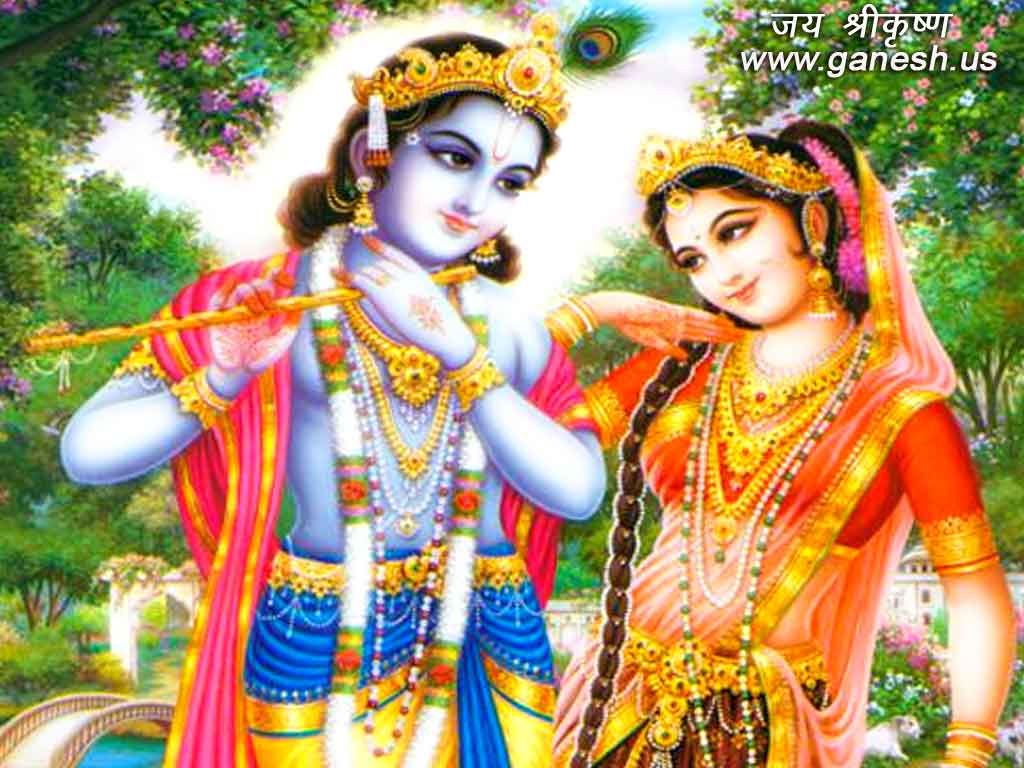
Now on to the story of "Radha". It turns out she is an important figure in Hindu theology. She is the lover of Krishna (Hindus take only 1 wife), but apparently figured so strongly in his life that today one can find temples in India dedicated to their relationship.

Krishna and Radha
Radha's Relevance


The Queen welcomes you in


I don't know what it is with Indians and white skinned girls. The entire time at Agra, I wondered if the Indian tourists came to check out the Taj or well, Radha, I mean Ghada.

At first they try to be discrete, as in conveniently lodging themselves in any picture you are trying to take, standing far enough in what they believe will not intrude in your shot, but close enough to make it look as though the shot was actually intended.

So I decided to humor the chaps and make their day by allowing them to have their shot taken with Ghada, or in other words, to pimp Ghada out!

Posing with the white girl... lose the moustaches boys


I suppose given how much Indians emptied our bank accounts during the trip, I really should have returned the favor and charged 10 INR for every photo that was taken. Damnit, even here I was charitable good guy Garbz!

Now if you think that this is just a bunch of single guys trying to have fun, well then, the story is a little more complex. We couldn't get too far in the Taj Mahal without one family or another asking to pose with Ghada. What was I? Chopped liver?

A family wants to pose
... and another

Husbands would ask Ghada to pose with their wives or daughters. Or they would ask the wives to do the dirty deeds for them. Is this their round-about-way of asking for a menage a trois?

OK well maybe Ghada was not alone. Japanese tourists harassed by playboys

Himalaya's Beautiful Dangers and Sneaky Vampires

Darjeeling was a beauty, but it was raining and it did not seem that sunshine was to come anytime soon. And none of the Himalayan areas seemed to be exempt from the monsoon weather. Had it been solely up to me, I would have stuck around Darjeeling for the three days, checked out the zoo, the Tibetan refugee center, Ghoom monastery and other landmarks which we missed by driving to Sikkim. Simply enjoyed the town, the people. But it was not all up to me.

Gaby's plans involved having us on the Himalayan roads after sunset and I was not too happy about it. The combination of fog, rain, narrow crappy mountain roads, steep valleys and darkness,at least in my eyes, provide a recipe for disaster. My sense of adventure did get dissed by Gaby during heated conversations but I stood my grounds and managed to have us on the mountain roads between 7am and 5pm. I may as well have saved our lives.


mountain road


representative foggy landscape during our drive to Sikkim
We arrived to Pelling, Sikkim around noon-time and were welcomed by pouring rain. We found a cute hotel "Pharmrong" where we were to spend our two nights in Sikkim. Our care-takers were nice young boys who were just wonderful. They even packed us breakfast on our last morning when we left at 6 am before the official breakfast time: boiled eggs,  veggie sandwiches and mango juice. Very homey feeling. When asked what type of eggs they prepared, they answered: chicken eggs.

our lovely room


Pelling was a pit-stop for trekkers and not a final destination in itself. It mostly consisted of hotels with one at every 10 m or so. The little town, however, was home to the second oldest Buddhist monastery in Sikkim. That afternoon, we hiked up to the beautiful sanctuary, led by a dog "Sandy"  which we met along the way and that made sure we did not lose our path.
Pemagyantse Buddhist Monastery

Pemagyantse Buddhist Monastery

There was not much to do in Pelling and in the evening we hit an internet café to research the areas around that may be visited. We had learnt that same day the Yuksom was home to the oldest monastery in Sikkim (Dubdi) and it was only an hour away from Pelling. How we learnt about Dubdi was also a highlight of the trip. While walking around Pemagyantse monastery we stumbled across young school girls in one of the houses. Intrigued, we asked them what they were doing there. We are here to meet our school director, they replied. Do you want to meet him too, they continued. Gaby and I exchanged a look that translated into hell yeah! We went upstairs with the girls to a room that ressembled a temple apart from the biohazard bag on the side, which for a second , confused me into thinking I was in the lab again. What was that bag doing there in the second oldest Buddhist monastery?

The girls sat composed and quietly waiting. We waited too. After a few minutes that seemed more like hours, an older man dressed in what looked like Buddhist monk clothing walked in. He looked at us and came towards our seat and took some objects from the table infront of us. It was then that Gaby and I realized that we had sat in his spot. We apologized and started to move but he stopped us. Sit sit, he said, signaling with his hand. He then sat across from us at the far end of the room. He asked one of the girls to take care of several chores like carrying  blue sheets to him gently and other tasks  that seemed incomprehensible to us. Must be the teacher’s pet, I whispered to Gaby who let out a chuckle. 

How can I help you, the man asked. Confused as to what to answer, we said that we were curious to learn about whether there was a school involved with the monastery. He then informed us we had walked into his home. He was not a monk. Apparently, a monk sold this house years ago to the man’s ancestor and so he now resides there abiding by the laws of the monastery. He also runs a school to educate needy students who can’t afford to pay fees. The school was a few km away. We teach them mathematics, sciences, economics, just as you learnt in your schools, but we also teach them an important thing, nonviolence. He houses in his home poor students from all over Sikkim. We later learnt, over dinner, that the same man was the captain of the King’s army back when Sikkim was still a kingdom, before 1975.

Back at the internet café, as we were discussing going to Yuksom, we got interrupted by Marco, a Swiss traveler who was planning to trek from Yuksom to Tashiding.  He wanted a ride, so we shared a jeep the next day. Marco was staying at Kabur, a small but very cozy and nicely decorated hotel that was apparently recommended by lonely planet. It was also the most happening place in town.
We stopped by the sacred lake then the majestic waterfalls before arriving to Yuksom, where we hiked up to Dubdi Monastery. We separated from Marco before Dubdi, as he embarked on a 4 hour trek.
The hike up to Dubdi was a slippery one over rocks and grass.
Kanchendzonga waterfalls

Khecheopalri sacred lake 


Dubdi was not as spectacular as Pemagyantse and I kept asking Lina, a friend traveling with us (also Gaby’s nanny), to stop screaming. Apparently some insect was biting her and making her bleed. She was way too sensitive, suck it up! My legs were also bleeding and I am not complaining. My left leg was dripping blood but my right had some dried blood on it.  Some weed cut, I figured. 

We were on our way down when Lina screamed again. A worm had bitten her in the same spot between her toes and she was bleeding.  I felt a bite too. Pain came from the dry blood on my right leg, then the dry blood started moving. It was not dry blood! It was a leech!!  Ahhhh I started jumping. Lina was yelling. I was yelling. We were jumping up and down. Leeches were everywhere. On our slippers, between our  toes, a total nightmare. We remove them, they attack again. More of them. They can’t be crushed. Ahhhhhhhhh! I managed to remove them and ran down the dangerous slippery hill. Two minutes later, I feel a bite. I stop. They are everywhere. I open my toes. They are in between all my toes. They are biting hard into my flesh and I struggle to pull them off.  They then stick to my fingers, I wave my hand hard to get them off. Lina is now making noises that sound like laughs but her facial expression is of horror. Gaby was apologizing, sorry lina sorry lina so sorry lina, are you crying?

I was alone with my leeches. No one is coming to my rescue. I figured I should stop yelling, accept my situation. Yes they are deeply rooted in my flesh, yes they are sucking my blood, yes they are everywhere, yes I will open my toes and they will be there sucking on them.  But yelling and jumping was not going help. I detached, the Buddhist way. I removed them one by one as I observed them from the outside, the Buddhist way, as if they are not on me. As I was blaming myself for wearing slippers, Gaby started dancing too, they had jumped on his shoes, gone through his laces and sneaked into his socks.  And that is why some lucky Sikkimese person is now enjoying a pair of new running shoes.  I took off a leech from Lina’s foot as we stepped into the car. The locals were amused by our encounter and surprised that we did not use the leech deadly weapon that is nothing but salt. Why the hell didn't anyone warn us??? Next time you're in the Himalayas during Monsoon, carry some salt, or maybe you can resort to crying or sweating but remember that surely there's no use for screaming. 
on our way up to Dubdi (leeches were already creeping between our toes) 

little vampire

Bite after-effects